Adult Provider Cessation Toolkit
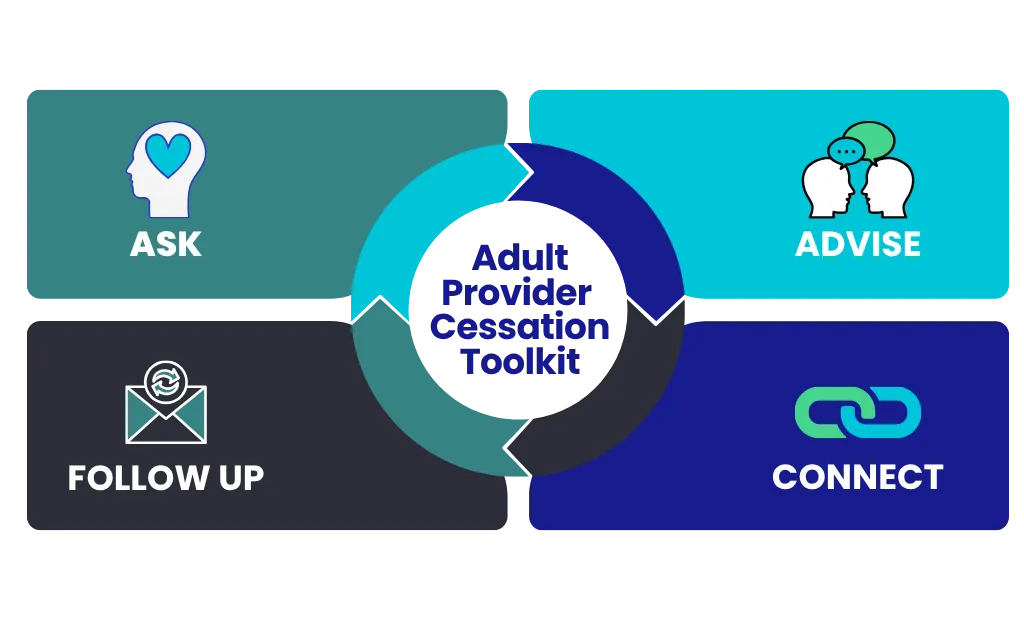
Ask - Advise - Connect - Follow Up:
A Clinical Referral Pathway for Adult Healthcare Providers
As a healthcare provider, you can make a real difference in the health of your patients, young and old, by using the Ask-Advise-Connect model to identify and assist people who are using commercial tobacco* products.
* The term “Commercial tobacco” is used intentionally to differentiate from the use of traditional tobacco by some Indigenous peoples and American Indian tribes.

70% of people who use commercial tobacco products are trying to quit or would appreciate assistance quitting (CDC MMWR Report).
✅ Screen every patient, at every visit, for commercial tobacco product use.
- Consider identifying nicotine use like a vital sign that you check every time.
- The choice of questions used is up to you and your healthcare facility, but it’s important to use phrases that refer to the wide range of nicotine products currently on the market. Some patients may use multiple tobacco products.
Example questions:
- “In the past 30 days, have you smoked cigarettes or used any other form of tobacco or nicotine?”
- “Do you use any tobacco or vaping products, like cigarettes, e-cigarettes, or nicotine pouches?”
➡️ For patients who are Native American, it is important to understand the difference between Commercial Tobacco and Traditional Tobacco.
- Commercial tobacco: manufactured and sold by the commercial tobacco industry, and is linked to addiction, disease, and death. Commercial tobacco includes any product that contains tobacco and/or nicotine, such as cigarettes, cigars, electronic cigarettes, hookah, pipes, heated tobacco, smokeless tobacco, and other oral nicotine products. Commercial tobacco does not include FDA-approved nicotine replacement therapies such as nicotine patches or gum.
- Traditional tobacco: Some American Indian tribes use tobacco as a sacred medicine and in ceremony to promote physical, spiritual, emotional, and community well-being. This traditional tobacco, which may be tobacco and/or other plant mixtures, is different from commercial tobacco and is used differently in sacred practices. When used appropriately, traditional tobacco is not associated with addiction and adverse health impacts (Keep It Sacred).
When speaking with Native American patients, we encourage you to use the term “commercial tobacco”.

Asking with respect shows you care and are someone your patient can talk to. Even if they’re not ready to quit right away, you can plant the seed to get them thinking about it. It may take several conversations to open the door to a nicotine cessation attempt (UpToDate).
✅ Ask open-ended questions to create a supportive atmosphere and assess their readiness to quit.
🗣️ For patients who respond that they use tobacco or nicotine, try to begin a conversation.
Example questions:
- “Do you mind talking about your smoking?” (or “your vaping” or “your use of nicotine products”)
- “How do you feel about your tobacco use currently?”
- “Have you thought about quitting? or tried to quit?”
- “What would be different about your life if you did quit?”
In a confident and empathetic manner, recommend the patient seek tobacco cessation support.
➡️ Ask permission to share information. “Would it be okay if I shared info...?“
- If response is 'yes', then utilize the resources under the Connect dropdown section on this page, including referring them to the WA State Quitline.
- If a patient says they don’t want to quit, briefly let them know about quit resources and that you're there for support when/if they choose to do so.
➡️ Acknowledge the challenges of quitting nicotine.
Enhance communication efforts. Keep conversations open.
- Frame with empathy. Be supportive of a patient’s efforts to quit.
- Prioritize audience. Focus on tobacco use as chronic disease management through persistent quit attempts.
- Use culturally and linguistically appropriate materials.
- Social stigma about tobacco use is high. Avoid language and reactions that could make your patient less likely to seek help and less likely to quit.
A slip or relapse is an opportunity to obtain information and reflect on triggers and patterns.
- Ask yourself: What barriers is the patient experiencing? How can we reduce them?
- Previous quit attempts build momentum toward a successful and long-term quit.
Resources:
- Tips from Former Smokers for Specific Groups (CDC): provides data, personal stories, and materials in different languages.
- ALA Quick Reference Guide: Why It’s Hard to Quit: Emphasizes that most people are motivated to quit, but it is difficult. It's important to plan for physical, psychological, and sociocultural challenges and to consider using combination therapy.
- King County Training for Healthcare Providers: Learn about Motivational Interviewing techniques to help people quit nicotine.

Research shows that individuals who use a combination of counseling (like a quitline or group program) and medication (like nicotine-replacement therapy) are more likely to successfully quit for good (2020 Surgeon General Report). Most importantly, encourage your patients to use a cessation method that they are comfortable with.
✅ For Patients Who are Ready to Quit:
Encourage them to create a quit plan. Discuss these steps:
- Set a quit date.
- Remove commercial tobacco products from their environment.
- Get support from family, friends, and co-workers.
- Anticipate potential challenges, especially during the first few weeks.
- Recommend this online tool: Making A Quit Plan on smokefree.gov
Connect them with cessation coaching services, either within your healthcare facility (if available), or through the Washington State Tobacco Quitline.
➡️ Washington State Tobacco Quitline: 1-800-QUIT-NOW
- Call (1-800-784-8669) or text READY to 200-400
- Visit https://quitnow.net/washington
- En Espanol: 1-855-DEJELO-YA (1-855-335-3569)
- Available 24-7
➡️ Discuss using a nicotine replacement medication.
- Learn about NRTs and Prescribing Guidelines: Toolkit to Implement Tobacco Treatment in Oncology Settings
✅ Overview of WA Quitline services
All Washington residents are eligible for free phone counseling and text message support through the Tobacco Quitline. Quitline staff may be able to identify face-to-face counseling programs.
The Tobacco Quitline has tailored services for people who are Alaskan Indian/American Native, people who are pregnant, people with a behavioral health condition, people who smoke menthol cigarettes, and people who are 18-26 and vape.
The Tobacco Quitline is provided in English and Spanish. Quitline staff also utilize third party translators for these languages: French, Cantonese, Mandarin, Korean, Vietnamese, Russian, Greek, Amharic (Ethiopian), and Punjabi.
- DOH summary table “Current Coverage, by Insurance Status”

✅ For patients who are trying to quit:
- Make a follow-up appointment (in-person/virtual)
- Ask your patient: "What is working with your efforts to stop using tobacco products? What isn’t working?"
- Address relapses and slips with support and problem-solving.
For patients using NRTs:
- Ask if they are experiencing side effects.
- Ask questions to understand if the patient is using the NRT correctly.
- Suggest a different NRT, if needed. (get source)
- More information about NRTs (link to subpage)
✅ For patients who aren’t ready to quit:
- Make a note to follow up with the Ask and Advise process at their next appointment.
- Don’t be discouraged, this patient isn’t ready today, but they may be ready to quit in the future.
Resources
Want to learn more about helping your patients quit nicotine?
We recommend these resources.
- Cessation/Quitting Support Services - listed on the Washington Breathes website
- Smoking Cessation - The Role of Healthcare Professionals and Health Systems (CDC)
- Treating Tobacco Use and Dependence: 2008 Update AHRQ Clinical Guidelines (current version)
- Patient Materials About Quitting Smoking from CDC
Print these patient cards or brochures or order printed copies.
- WHO Clinical Treatment Guidelines for Tobacco Cessation in Adults (new in 2024! includes system changes for healthcare facilities)
- Learning About Health Living: Tobacco and You Treatment manual from Rutgers University tailored for people with mental health conditions, including tools for motivational groups. Revised 2024.
Trainings:
American Lung Associations Ask, Advise, Refer to Quit Don’t Switch online training that gives providers tools and strategies for initiating a brief tobacco intervention and is based on CDC’s Ask-Advise-Refer model. Use the Registration link to sign up.
For providers in King County:
Learn more about about Motivational Interviewing techniques to help people quit nicotine through an online course: King County Training for Healthcare Providers
This toolkit was developed by the coalition’s Improving Cessation Treatment Workgroup and approved by the Steering Committee of Washington Breathes. It provides evidence-based materials developed by the CDC, the American Academy of Pediatricians, the Washington State Department of Health, and other authoritative sources.